
Soraya Martín Suárez and the Role of Advanced Imaging in Brain Research
Modern neuroscience faces one of its greatest challenges: understanding how processes such as inflammation and neuronal hyperactivity alter the plasticity of the adult brain and contribute to the development of neurological diseases. In this context, the combination of advanced biological approaches and state-of-the-art imaging technologies is key to generating new knowledge with real-world impact.
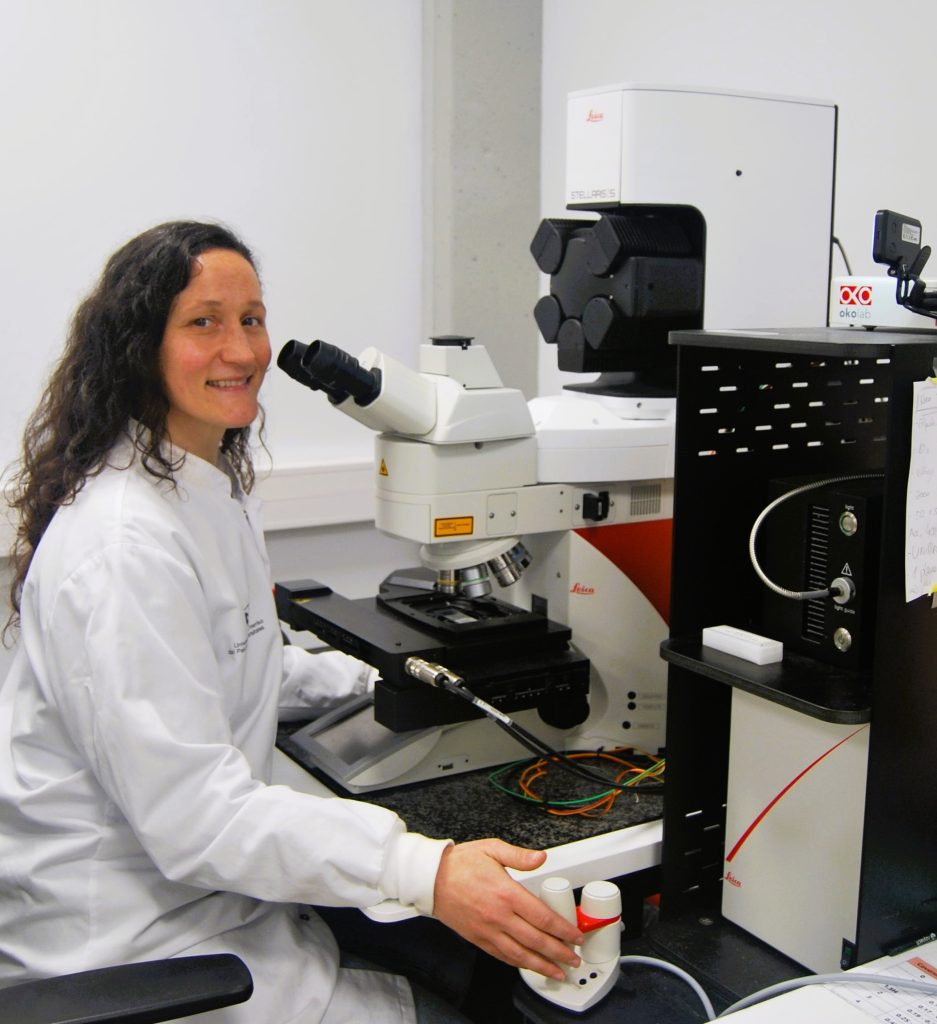
A notable example of this approach is the work of Soraya Martín Suárez, principal investigator at the Achucarro Basque Center for Neuroscience and co-leader of the Neurogenesis, Neuroinflammation and Network Dynamics (3ND) laboratory.
Understanding adult neurogenesis in pathological contexts
Soraya Martín Suárez’s research focuses on analyzing how neuroinflammation and neuronal hyperexcitability affect neurogenesis in the adult hippocampus, a process fundamental to memory, learning, and brain adaptation. Her work specifically addresses pathological conditions such as epilepsy and changes associated with brain aging.
Throughout her career, she has contributed to projects focused on temporal lobe epilepsy, Dravet syndrome, and the development of neuroprotective strategies aimed at preserving brain plasticity and function. These studies help identify cellular and molecular mechanisms that may open up new therapeutic avenues for addressing cognitive decline and disorders associated with epilepsy.
“Understanding how the brain reacts to inflammation and hyperactivity is essential for developing new therapeutic strategies for neurological disorders.” — Soraya Martín Suárez
The Value of Advanced Imaging in Neuroscience
An essential part of this research is access to high-level imaging technologies, which allow for the visualization and analysis of complex cellular dynamics in the brain with a resolution and precision impossible to achieve with conventional methods.
Soraya Martín Suárez’s team utilizes advanced imaging technologies available through the Bilbao Node of Euro-BioImaging Spain, integrating high-performance microscopy with cellular and molecular approaches. This access allows for:
*Visualizing cellular processes in complex brain tissues.
*Analyzing interactions between inflammation, neuronal activity, and neurogenesis.
*Obtaining robust quantitative data for basic and translational research.
Euro-BioImaging Spain thus enables research groups to access state-of-the-art infrastructure without having to make large investments in equipment, accelerating the development of innovative projects and fostering scientific competitiveness.
Collaboration, international networks, and translational impact
At the Achucarro Basque Center for Neuroscience, Soraya conducts her research in a multidisciplinary and international environment, collaborating with networks that integrate neuroscience, advanced imaging technologies, and translational approaches. This collaborative model is essential for connecting fundamental biology with real-world clinical challenges—one of the pillars of current brain health research.
Euro-BioImaging Spain: A Strategic Partner for Neuroscience Research
Stories like that of Soraya Martín Suárez reflect the role of Euro-BioImaging Spain as a key infrastructure for driving innovative research, supporting the scientific community with access to advanced imaging technologies, expert knowledge, and specialized services.
Science advances thanks to researchers who combine relevant biological questions with cutting-edge technological tools, and thanks to infrastructures that make that connection possible.